Paul Howe
Black Hawk DownPaul Howe emerges as a forceful small-unit leader at the Super 61 crash site, where his instinct is to seize ground and shape the fight rather than remain exposed and wait. As the battle’s confusion deepens, that drive for action becomes increasingly entangled with anger and the collapse of restraint.
Initiative at the Super 61 Crash Site
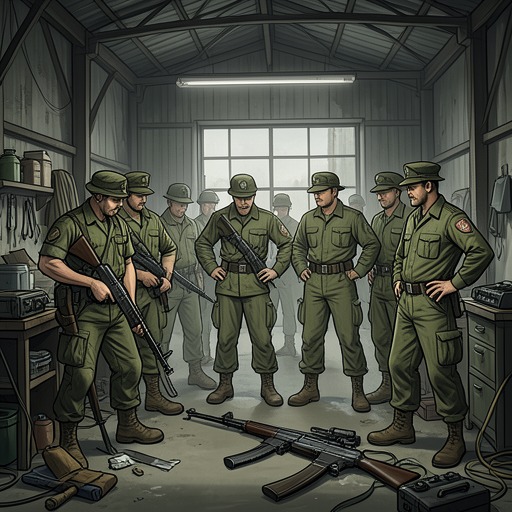
With Rangers and Commando soldiers pinned down by small-arms and rocket-propelled-grenade fire, Howe recognized that the men on the street needed cover. He and another soldier drove their shoulders into the gate of a narrow courtyard between two houses and forced their way inside, weapons ready. A frightened family—a man, his wife, and several children—was sheltering in a room. Howe kept his weapon trained with one hand while coaxing them out with the other; after searching them, he handed them to his team, who restrained them and moved them into a side room.
Once the adjoining rooms had been cleared, Howe waved in Captain Scott Miller and the other soldiers. The courtyard became a command post and casualty collection point, a defensible refuge for wounded men when the ground convoy was lost and badly damaged. Howe, however, did not regard holding that position as enough. When a sergeant major ordered him back outside to help the Rangers still on the street, Howe believed the force should instead strengthen its position, widen its perimeter, and take nearby buildings to improve its fields of fire. Angry at what he saw as passive direction, he gathered ammunition, grenades, and antitank weapons from wounded Rangers and went back out to engage the Somalis.
Tactical Method and Frustration
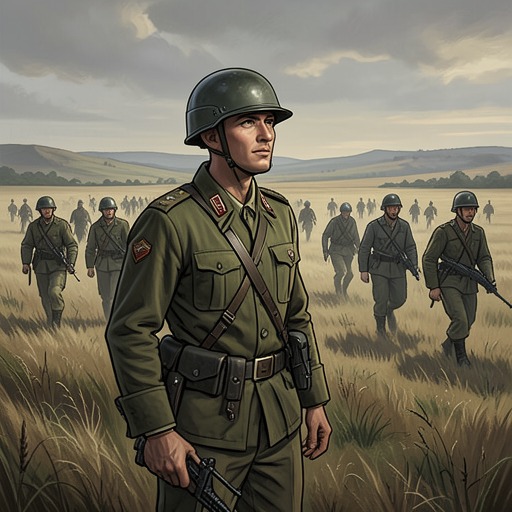
Howe searched for a position from which he could cover the road north without standing out in the open. He found a pocket of concealment beside the west wall: a tree near Shawn Nelson’s position and the slope behind Howe obscured him, though neither offered physical protection from incoming fire. From there, a yard or two from the wall, he fired methodically and conserved his ammunition. His anger at what he saw as the Rangers’ hesitation accompanied the shooting, but his choice of position showed the practical calculation beneath his impatience.
The ammunition itself sharpened his frustration. Howe was using the Army’s new 5.56mm green-tip rounds, whose tungsten-carbide penetrators could punch through metal. In his experience, they also passed through Somali gunmen without necessarily stopping them; unless a round struck the head or spine, he felt he might need five or six hits to bring a man down. The passage presents his fire as both disciplined and furious: he rationed rounds from cover while cursing at the Rangers’ caution and confronting a weapon whose penetrating power did not guarantee an immediate result.
Anger After the Broadcast
After the battered Rangers and Commando soldiers watched footage of Somalis celebrating on the rotor blades of Super 64, the screen showed a body being dragged through the street on a rope and kicked and poked. The camera angles made it difficult to tell whether the dead man was a helicopter crew member or a Commando soldier, but the uncertainty did not soften the scene for the watching men. Paul Howe returned to the hangar ready to go back out, now intent on killing as many Somalis as he could. He had had enough: in his resolve, the rules and the moral line they represented no longer mattered. The forceful tactical leader who had pressed to expand the crash-site perimeter was now shown at the edge of restraint, his anger turning the prospect of renewed combat into a desire for indiscriminate vengeance.
Restraint and Its Collapse
The rules governing the Rangers were strict: they were to fire only at people who pointed weapons at them, even as armed Somalis moved among women and children and the rule became increasingly difficult to apply. The missions had also stirred widespread hatred in Mogadishu. Against that background, Howe’s later declaration that rules of engagement no longer mattered marks more than a burst of anger after the images of a body dragged through the streets: it places his appetite for retaliation in direct conflict with the restraints the force had been given. His arc moves from demanding stronger positions and better fields of fire to imagining renewed combat as a path of vengeance, exposing how quickly tactical urgency could become moral abandonment.